Silicone vs Rubber Teether: What Actually Matters
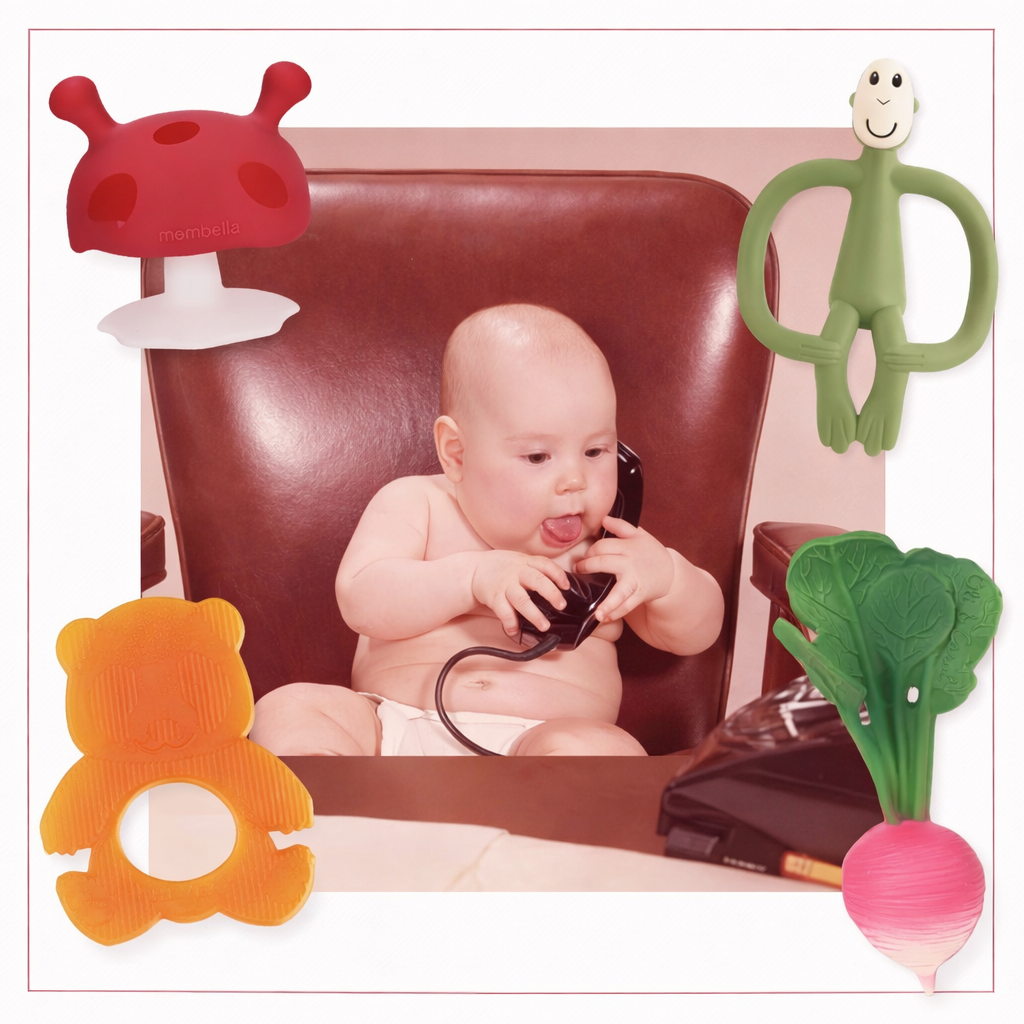
Most teethers are labelled “BPA-free”, “food-grade”, or “non-toxic” — which sounds reassuring, but doesn’t say much about the material itself. The more useful comparison is silicone vs natural rubber.
Silicone is a man-made material derived from sand, while natural rubber comes from rubber tree sap. Both are relatively simple, stable materials that don’t require plasticisers (like phthalates), which is why they’re generally preferred over mixed or lower-quality plastics. In practice, silicone is more durable and easier to clean, while natural rubber is a more minimal, plant-based option that can degrade over time.
What works also varies — babies often prefer different shapes and textures at different stages.
Ultimately, there isn’t a single “best” option — most parents end up using both.
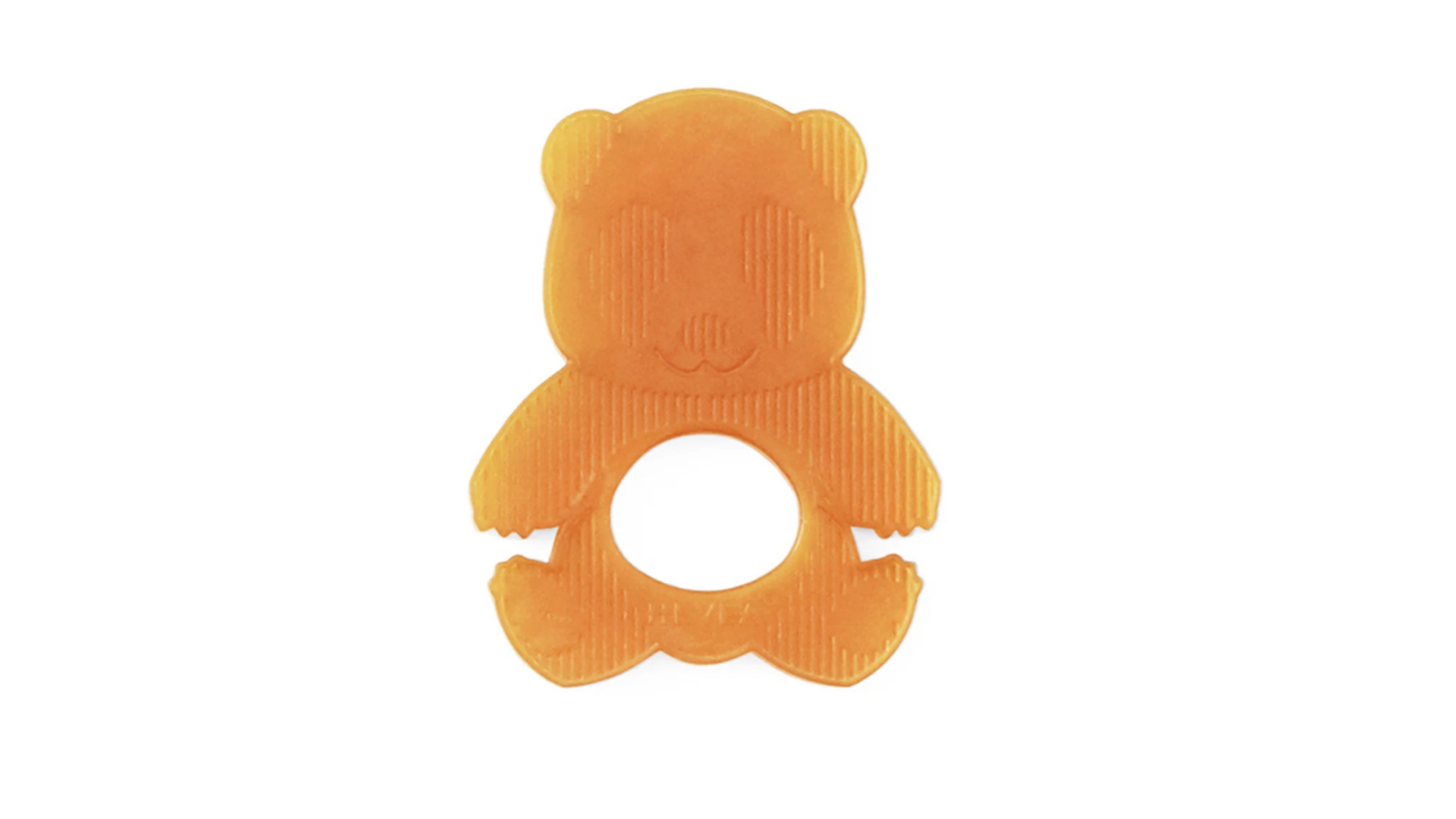
- • 100% natural rubber
- • No coatings or added components
- • Biodegradable material
- • Can be cooled briefly in the fridge for added relief
- • Can degrade over time and requires more care
- • Less engaging for some babies
- • Not dishwasher safe — requires more careful cleaning
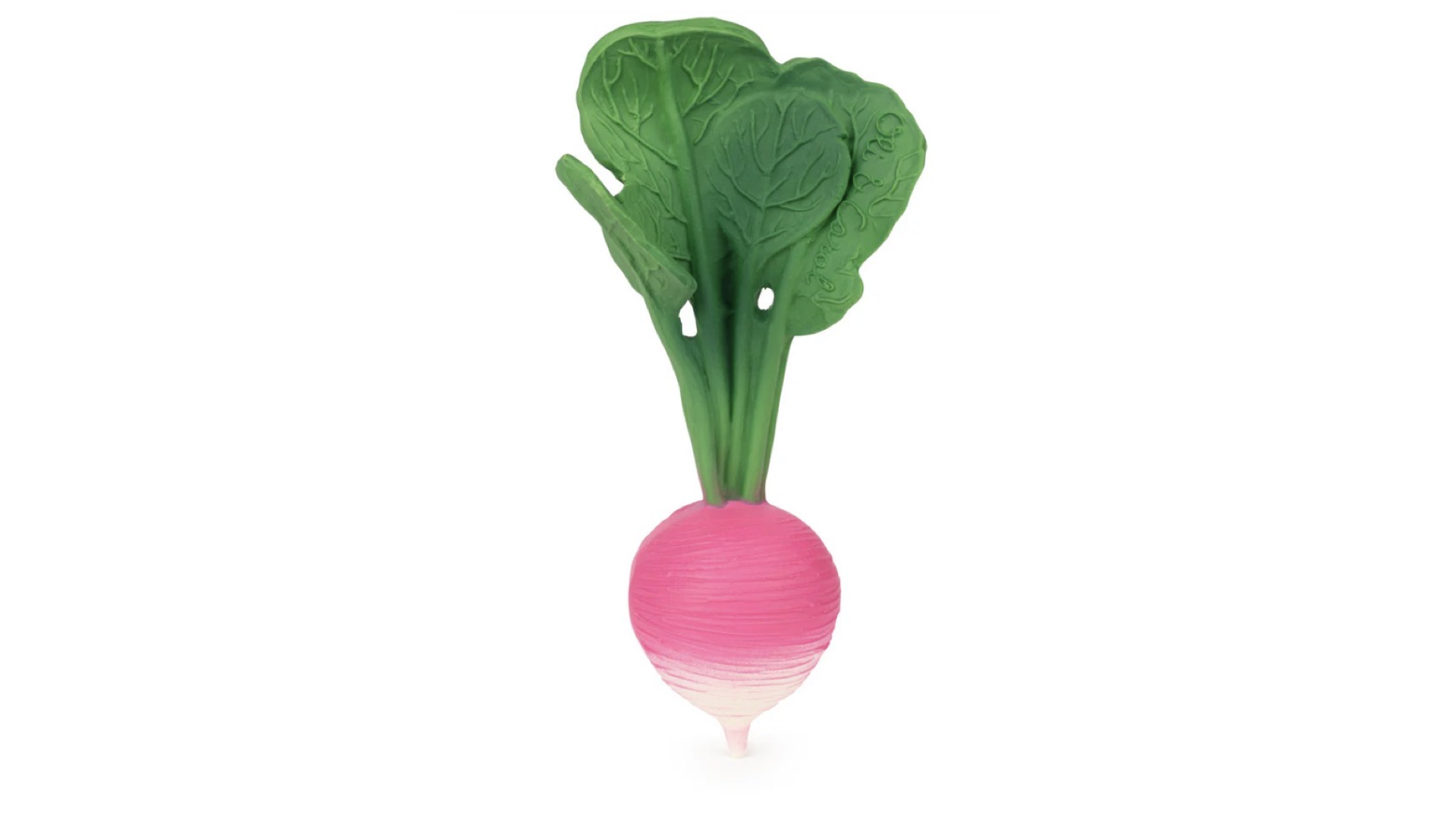
- • 100% natural rubber
- • Sealed, one-piece design (no holes)
- • More texture and grip
- • More engaging for babies
- • Biodegradable material
- • Can be cooled briefly in the fridge for added relief
- • Uses food-grade dyes (more processed than single-material options like Hevea)
- • Not dishwasher safe — requires more careful cleaning
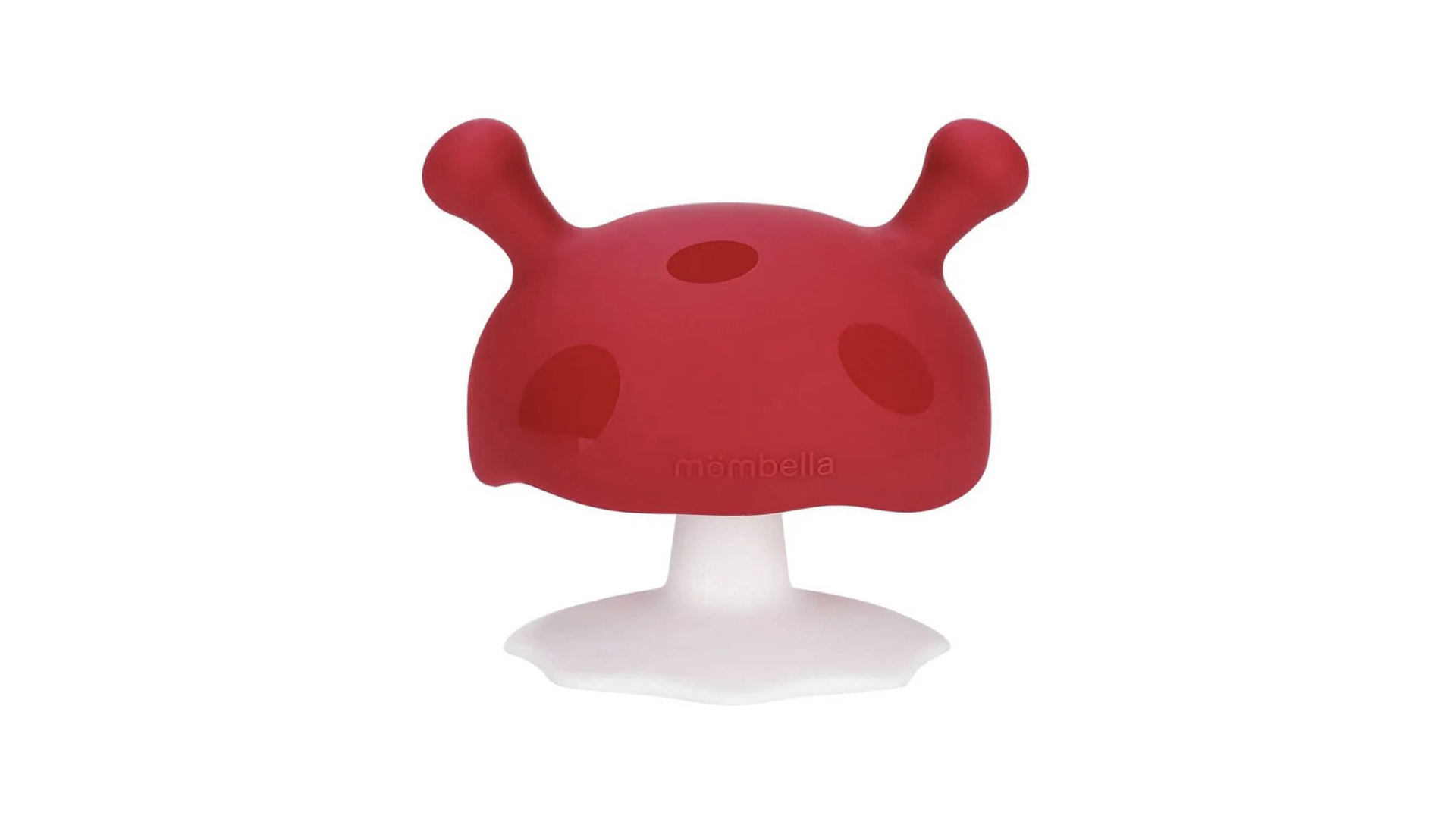
- • Food-grade silicone
- • Soft, flexible texture
- • Lightweight and easy for babies to hold
- • Often stays in baby’s mouth more easily than other teethers
- • Dishwasher safe and easy to clean
- • Can be cooled in the fridge for added relief
- • Cheaper than most options
- • Silicone is a synthetic material
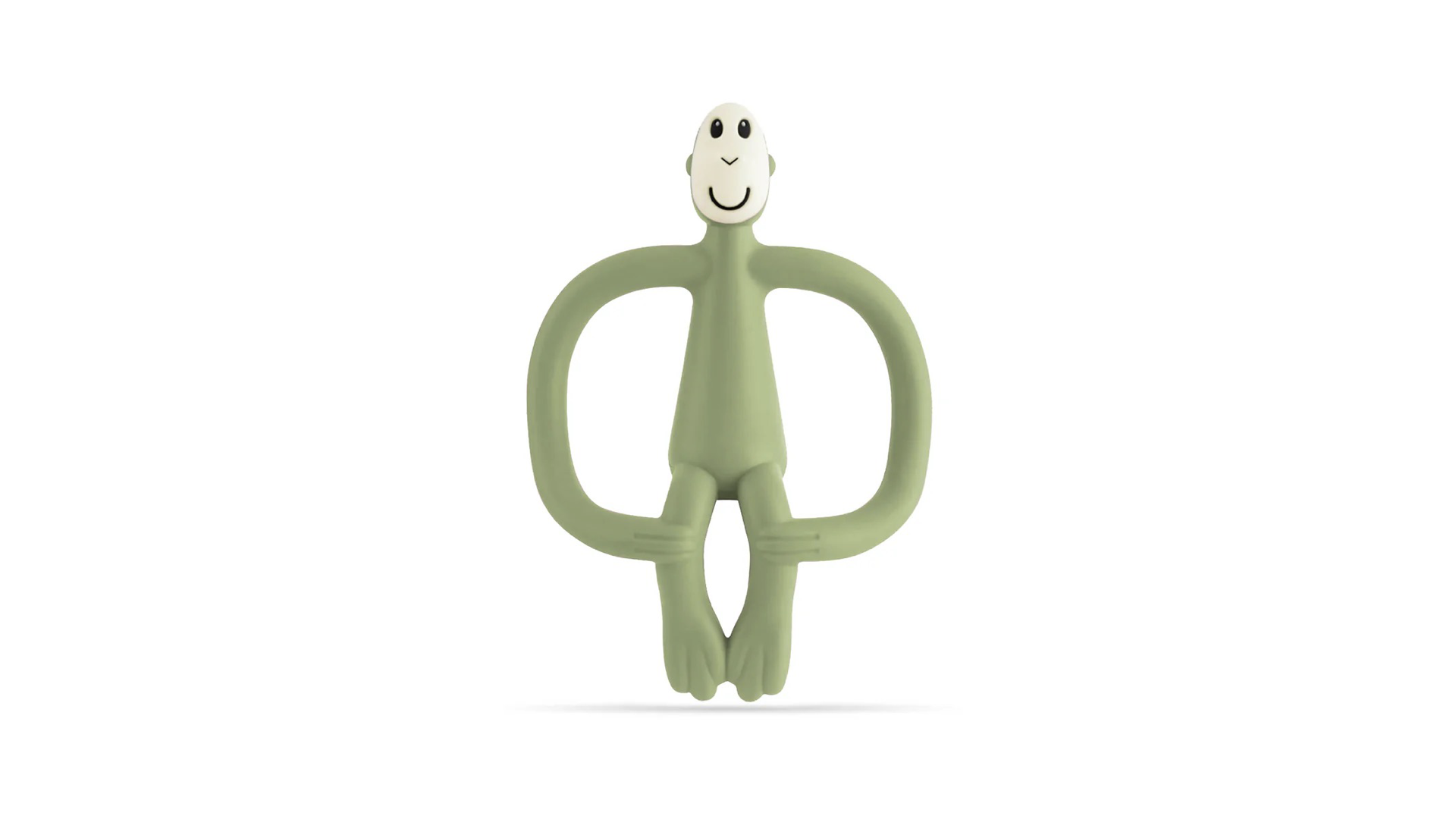
- • Food-grade silicone
- • Longer shape helps reach back gums
- • Can be used to apply teething gel to gums
- • Doubles as a first toothbrush
- • Dishwasher safe and easy to clean
- • Can be cooled in the fridge for added relief
- • Silicone is a synthetic material
- • Less intuitive for younger babies
- • Additional features (e.g. gel application) won’t be used by all parents
There isn’t a single best teether — what works is often trial and rotation.
For us, we tried a few.
We started with Hevea for the simplest, most minimal option, then added Oli & Carol for better grip and engagement. The smaller shapes worked best — our baby could hold them easily and keep them in her mouth, while the larger shapes were harder for her to manage.
We also tried Matchstick Monkey. She was happy to chew on it for short periods, but didn’t show sustained engagement.
Mombella was the standout. It’s lighter, easier to hold, and one of the few teethers that was consistently accepted.
In reality, babies will mouth anything within reach. We kept a small rotation of teethers that felt as clean and simple as possible. We placed them where needed — by the nappy caddy, in the pram, and within reach at home.