Best Non-Toxic Playpens
Most babies start using playpens around 4–6 months and stop once they begin climbing out — typically between 12 and 18 months.
At this stage, babies interact closely with their environment. They mouth surfaces, spend time in direct contact with materials and breathe in the surrounding air. Playpens aren’t occasional-use items. They’re enclosed spaces where babies spend real time.
That matters because many playpens are designed for durability and cost, not prolonged contact.
Unlike cots or high chairs, there is currently no dedicated Australian safety standard for playpens. That makes material transparency and construction more important than labels alone.
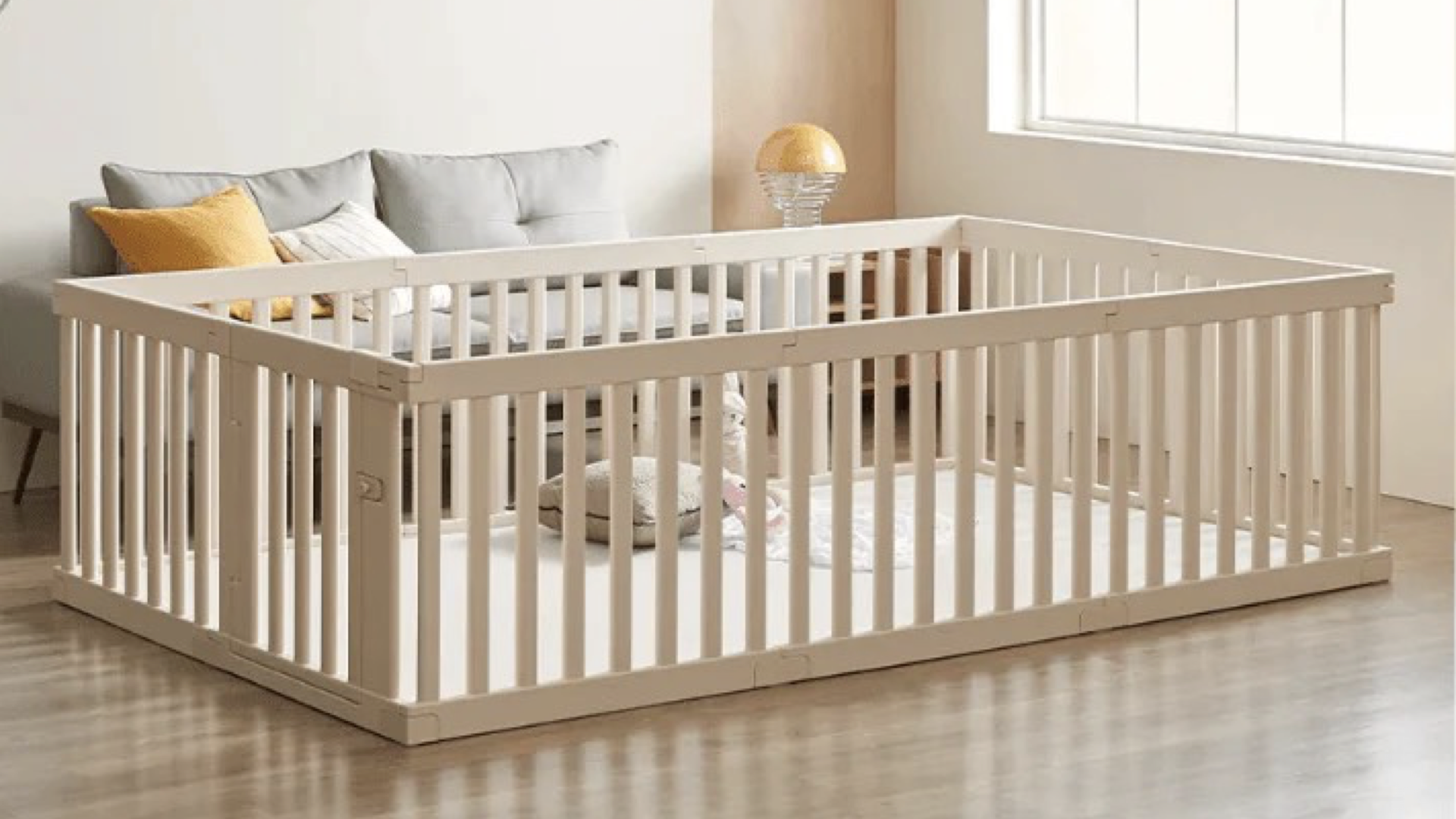
- • Materials are clearly disclosed across all components (rigid HDPE plastic panels with plastic joints and rubber non-slip feet
- • Rigid structure with less movement than most playpens
- • Modular panel system allows you to adjust size and layout
- • 67.3 cm panel height (higher than most, harder to climb out early)
- • Three-stage locking door (more secure than standard latch systems)
- • Non-slip base helps keep the structure in place
- • Fits standard 200 x 140 cm play mats
- • Expensive for a playpen
- • Heavy and not easy to move once assembled
- • Takes time to set up and reconfigure
- • Large footprint once fully assembled
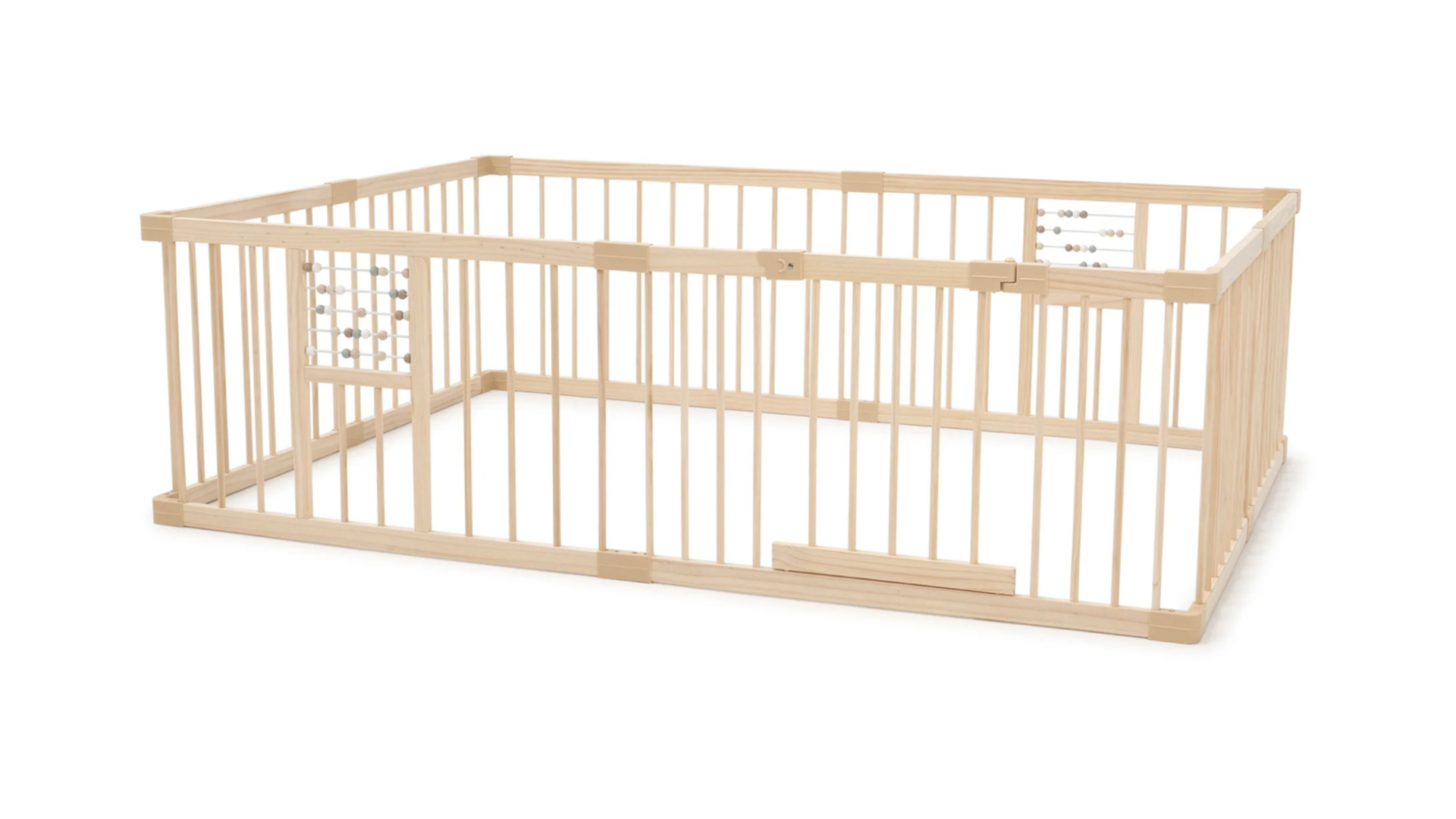
- • Unfinished timber (no added coatings or surface treatments)
- • Stable in its standard full-size configuration
- • Modular panel system allows you to adjust size and layout
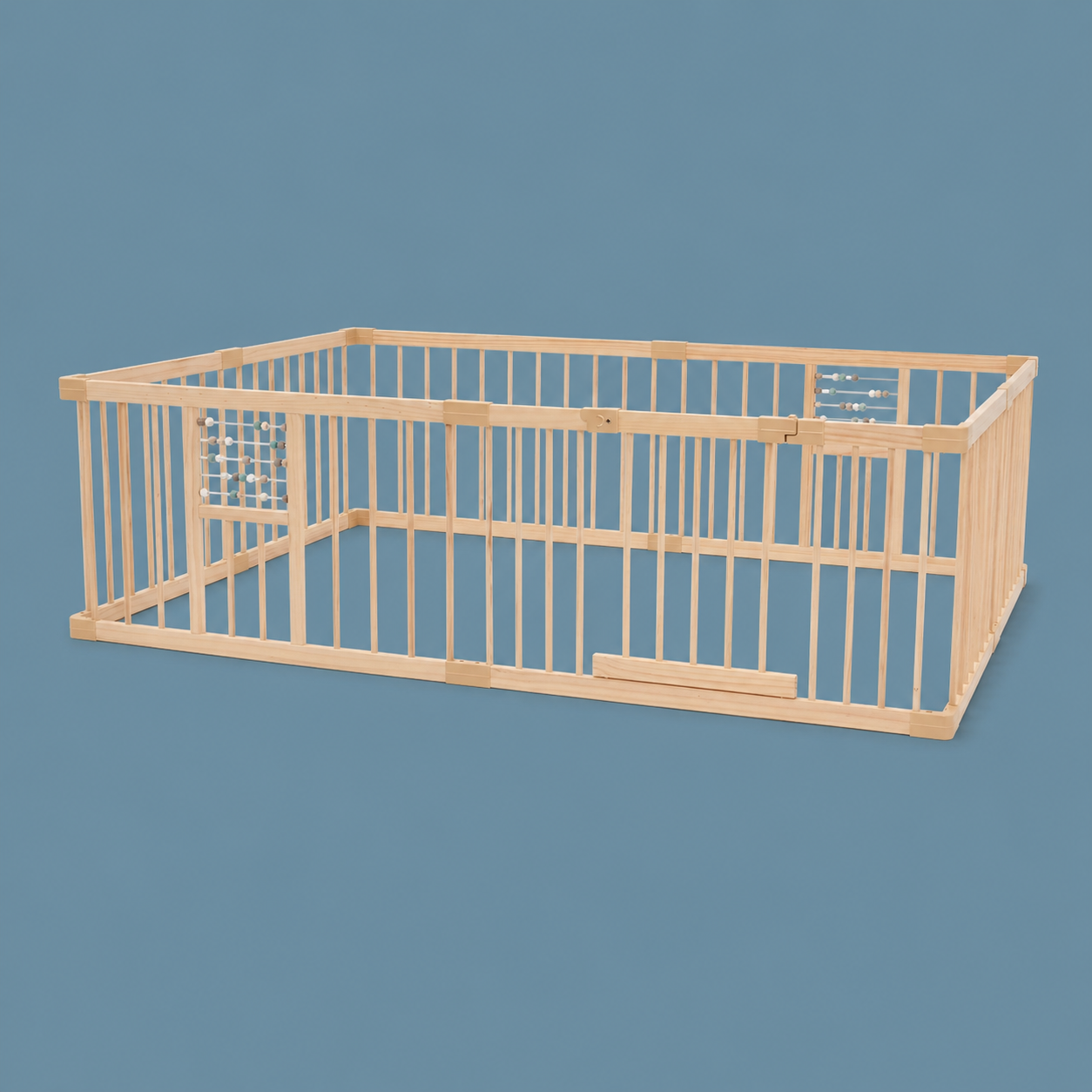
- • Sits well in a living space (doesn’t feel like baby gear)
- • Built-in abacus panel (nice to have, not essential)
- • Fits standard 200 x 140 cm play mats
- • 61 cm panel height (standard height, climbable as baby gets older)
- • Less flexible than panel-based systems (reconfiguring isn’t quick)
- • Less stable when configured smaller than the standard setup
- • No non-slip base — can shift on smooth floors
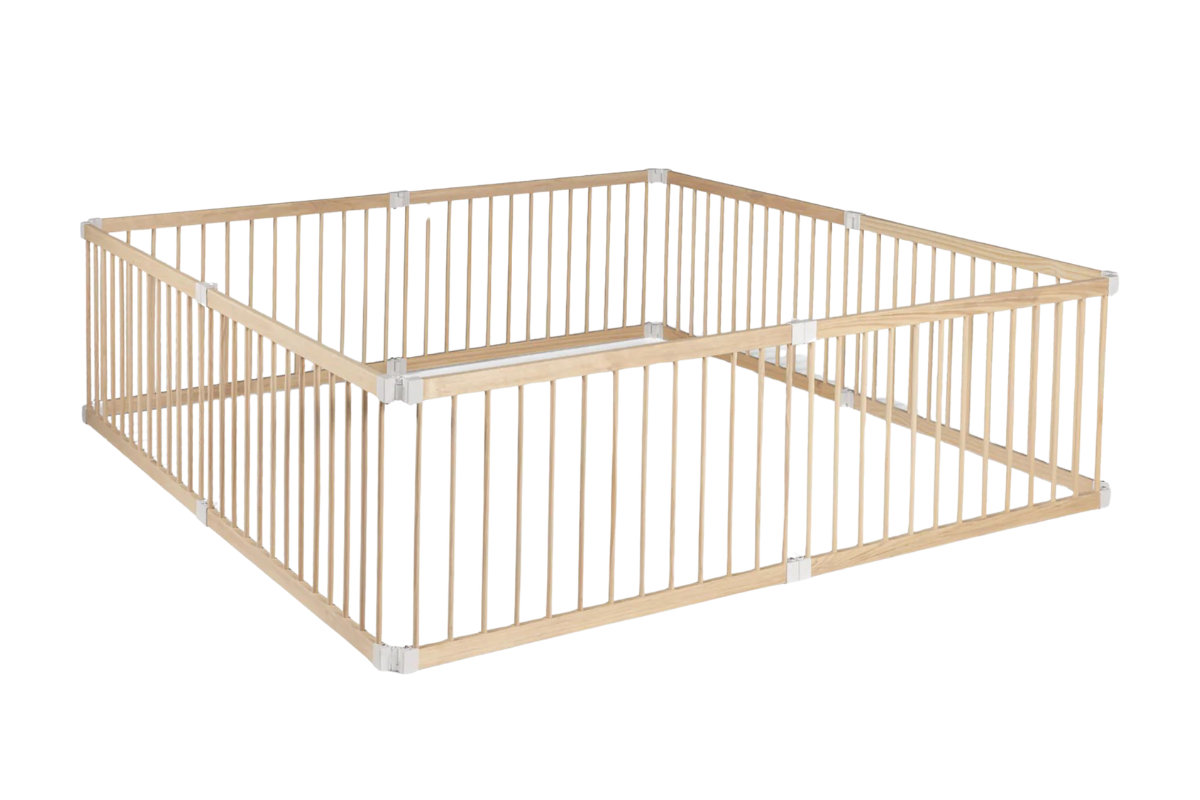
- • Unfinished timber (no added coatings or surface treatments)
- • Modular panel system allows you to adjust size and layout
- • Simple, no-frills construction
- • Made in Australia
- • 60 cm panel height (standard height, climbable as baby gets older)
- • Build and finish feel more basic than higher-end options
- • No gate — requires lifting baby in and out
- • No non-slip base — can shift on smooth floors
- • Doesn't align with standard 200 x 140 cm play mats
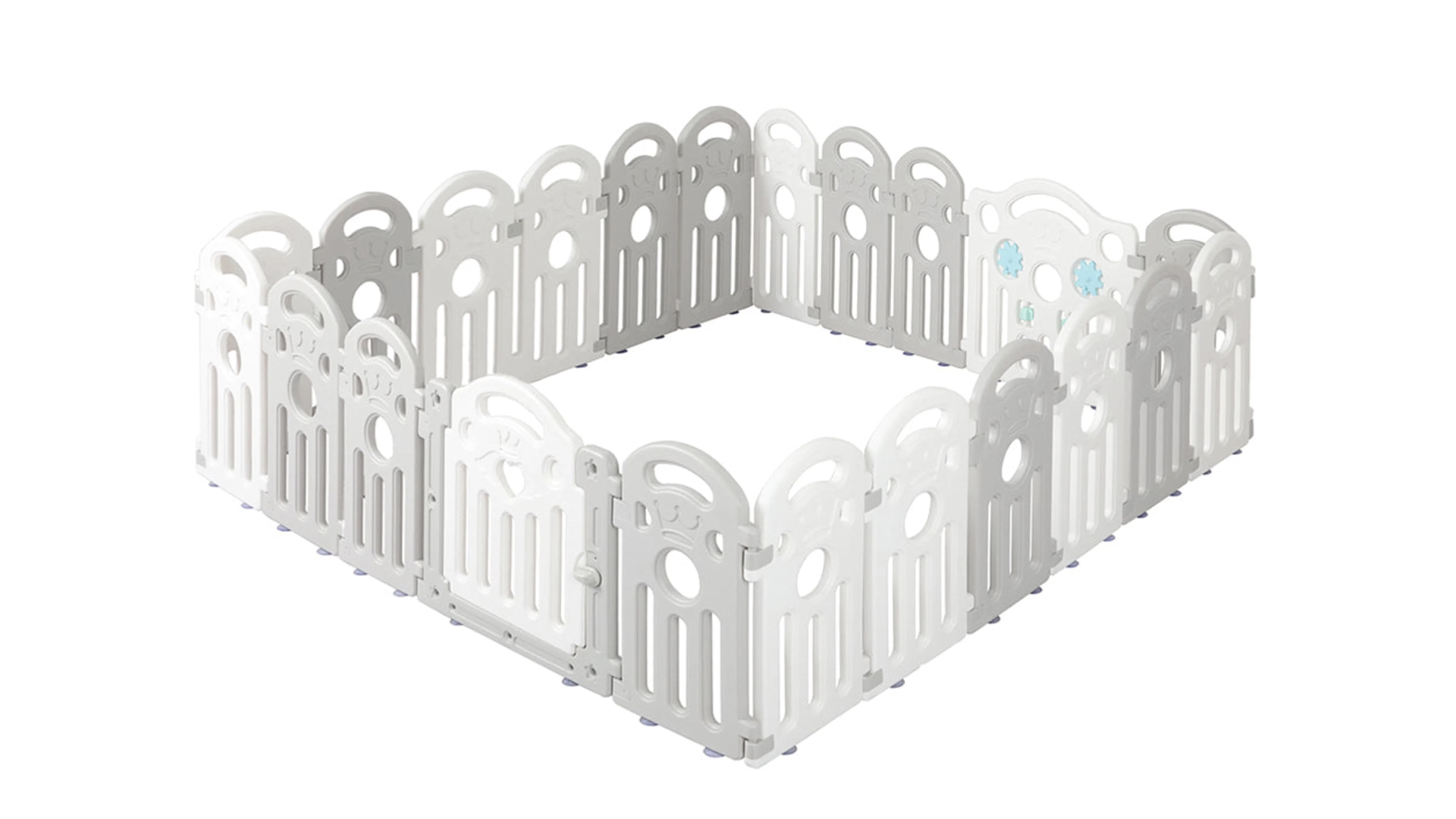
- • HDPE panels (rigid plastic that doesn’t require added plasticisers like phthalates)
- • Modular panel system allows you to adjust size and layout
- • Can be configured into square or rectangular layouts (standard 200 × 140 cm play mat)
- • Suction cup base helps keep the structure in place
- • 60 cm panel height (standard height, climbable as baby gets older)
- • Less rigid than timber playpens
- • Suction base works best on smooth floors (less effective on rugs/carpet)
We went with The Muse Edition (Natural). It fits a standard 200 × 140 cm mat exactly, came in at a more reasonable price than ALZiP Woodly and met our aesthetic considerations. It felt simple, unfussy and designed to sit comfortably in our living room.
Ultimately, we preferred timber over plastic — it looks more like furniture, which matters when it’s something you’re seeing every day.
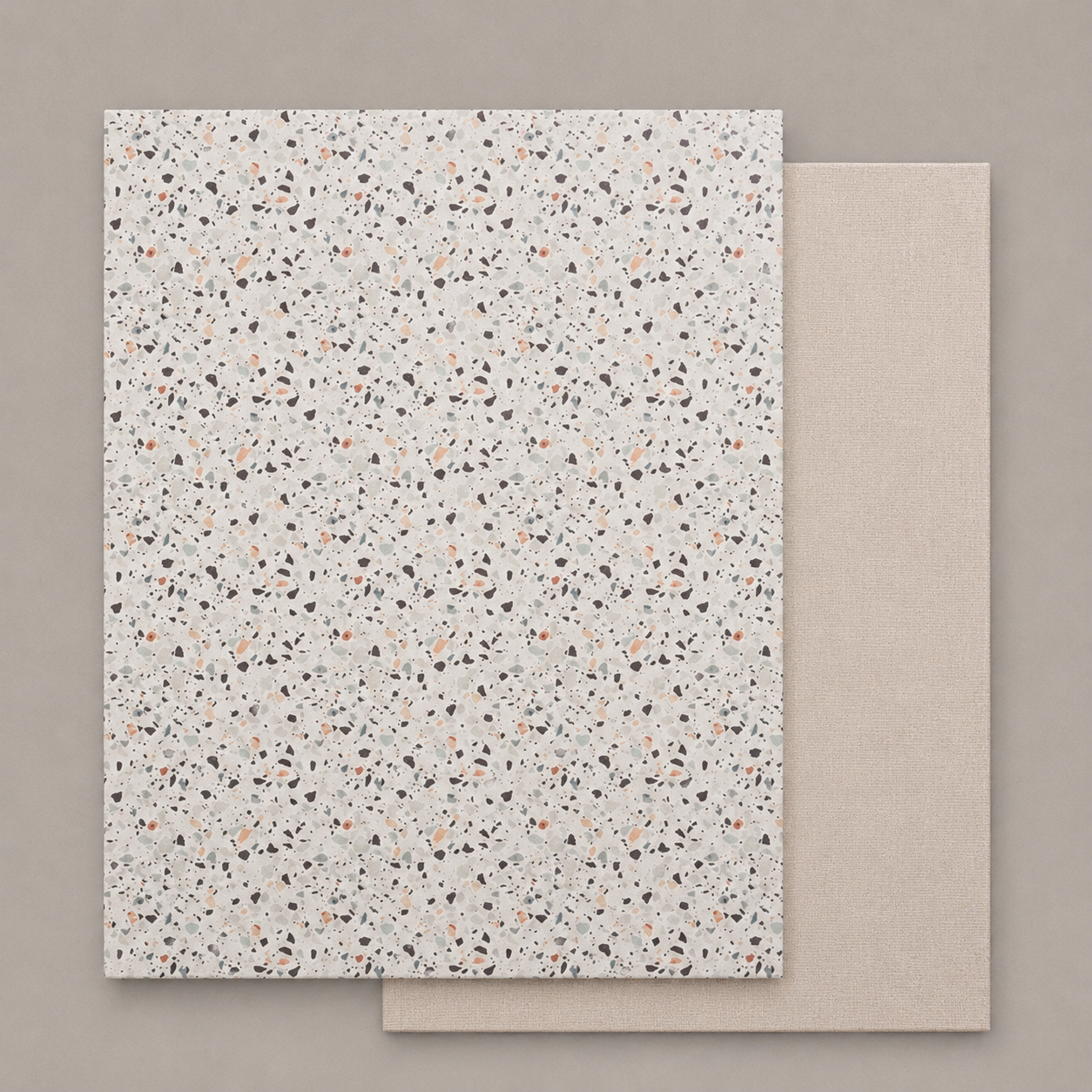
Pair it with The Muse Edition foam mat and order together - it arrives as a complete setup for a designated play zone from day one.